The 4 Levels of Using AI
A lot of smart people have tried AI, gotten mediocre results, and decided it's overrated.
I understand why. But almost every time, the problem isn't the AI.
It's which level they're using it at.
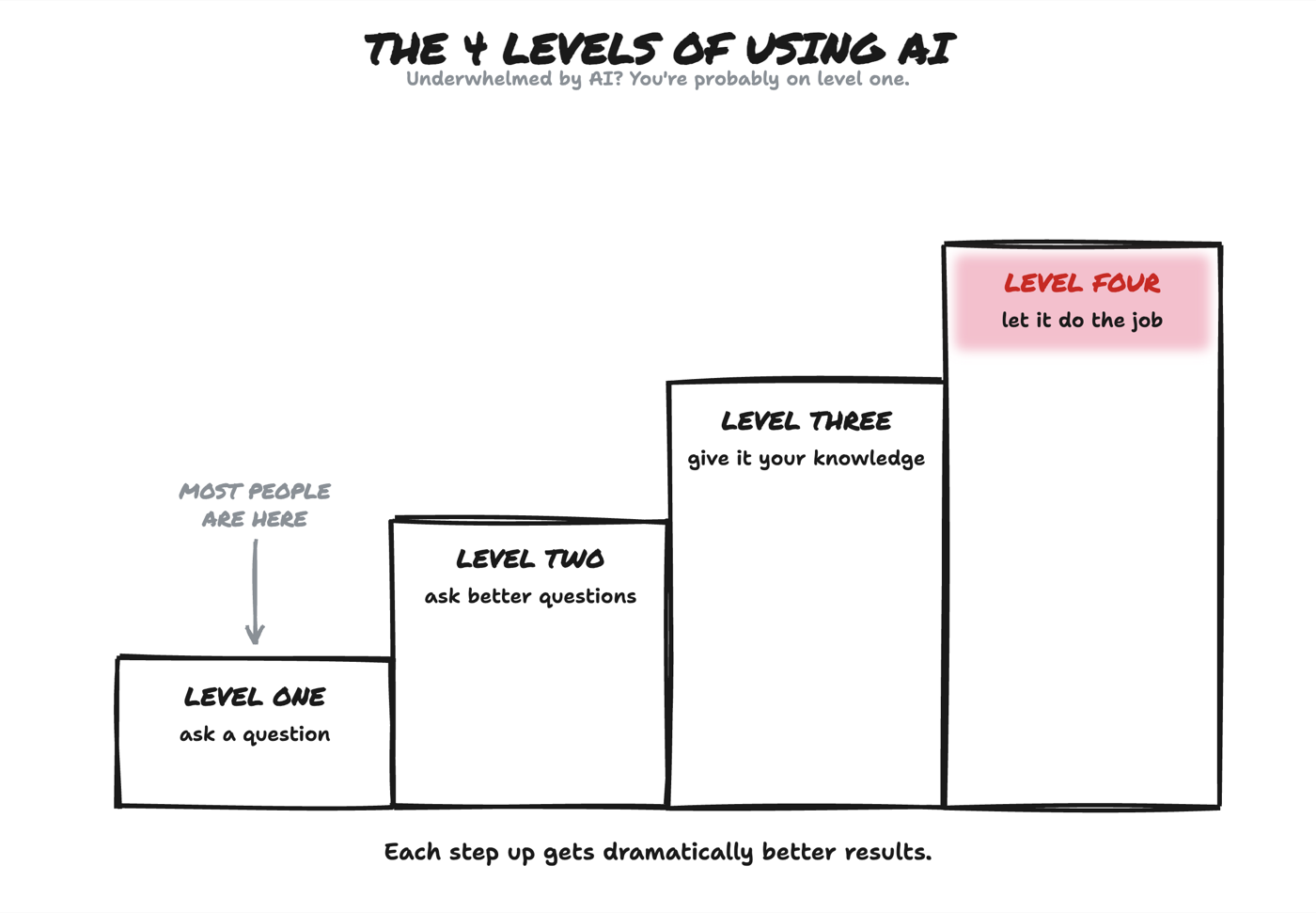
When I teach this, I split it into four levels. Most people are on level one. Each level up gets dramatically better results.
First: productivity vs. performance
Before the levels, one distinction.
AI can 10x your productivity. It can write the first draft, do your market research, brainstorm, and handle a lot of the technical grunt work.
It can also 10x your performance, which is different. It can help you do things you couldn't do before, like tailoring a message to each individual customer.
Most people only think about the first one. The higher levels are where the second one opens up.
Level 1: Ask a question
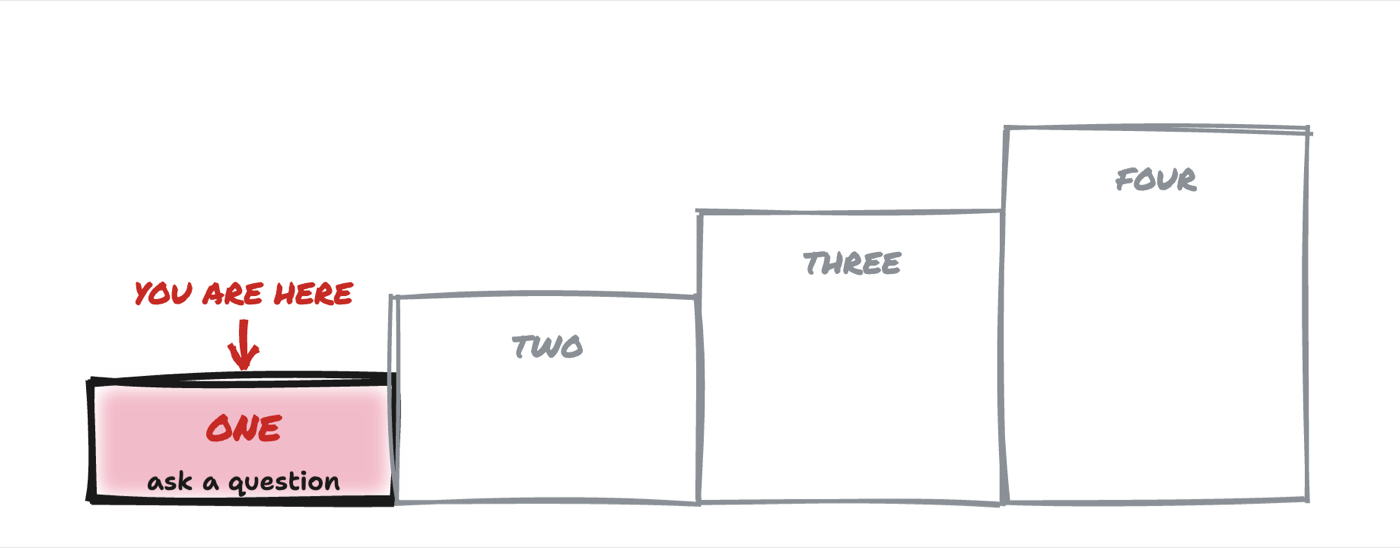
This is where almost everyone starts. You open ChatGPT, ask for a sales letter, and get something... fine. Generic. Forgettable.
So people conclude AI is mediocre.
What's really going on is the oldest rule in computing: garbage in, garbage out. A vague question gets a vague, average answer, because the AI is drawing on everything it knows about everything.
It's not a human being, even though it acts like one. It doesn't know your customer, your offer, or what "good" means for you unless you tell it.
Level 2: Ask better questions
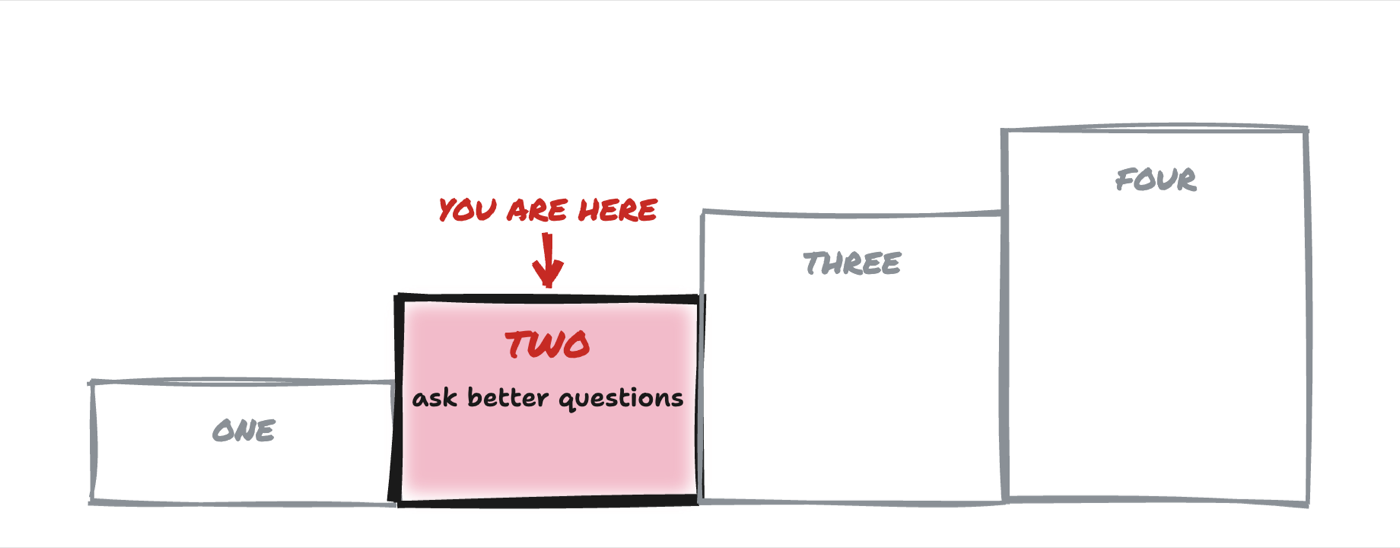
This is what people call prompt engineering: the skill of giving the AI clear, specific instructions so you get the answer you want.
There are plenty of prompt formulas out there. Some are good. But the biggest improvement I've found isn't a formula. It's a way of breaking the work down.
I call it prompting from the inside out.
Don't ask for a whole sales page. A sales page is made of parts: headline, story, bullet points, offer, guarantee, call to action. And each of those is made of smaller parts.
So build the pieces one at a time. Ask for 20 headlines and pick the best. Then the story. Then each bullet. Then put it all back together.
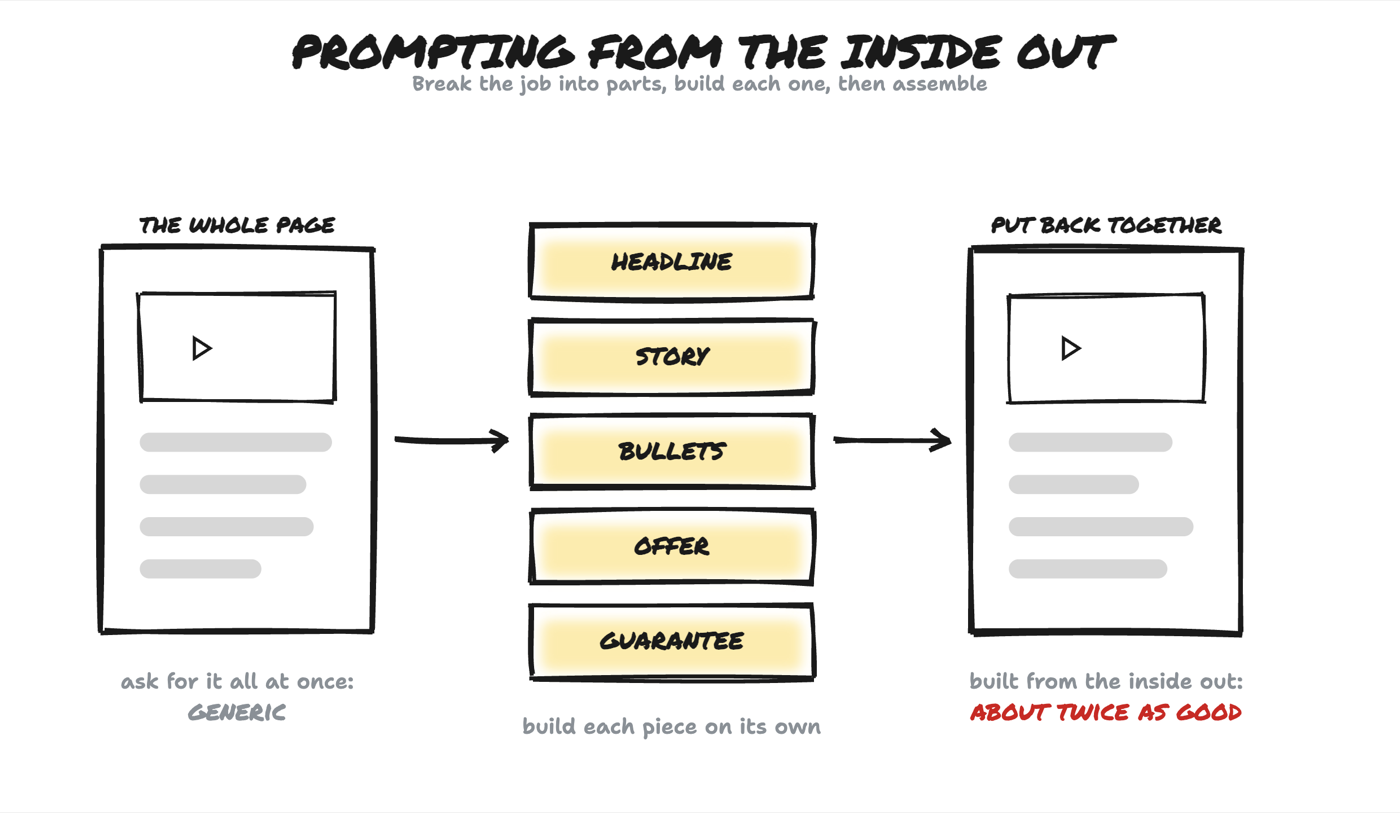
Do that, and the quality of what you get roughly doubles, whatever formula you use. It's the same technique we use to have AI write most of our code.
Level 3: Give it your knowledge
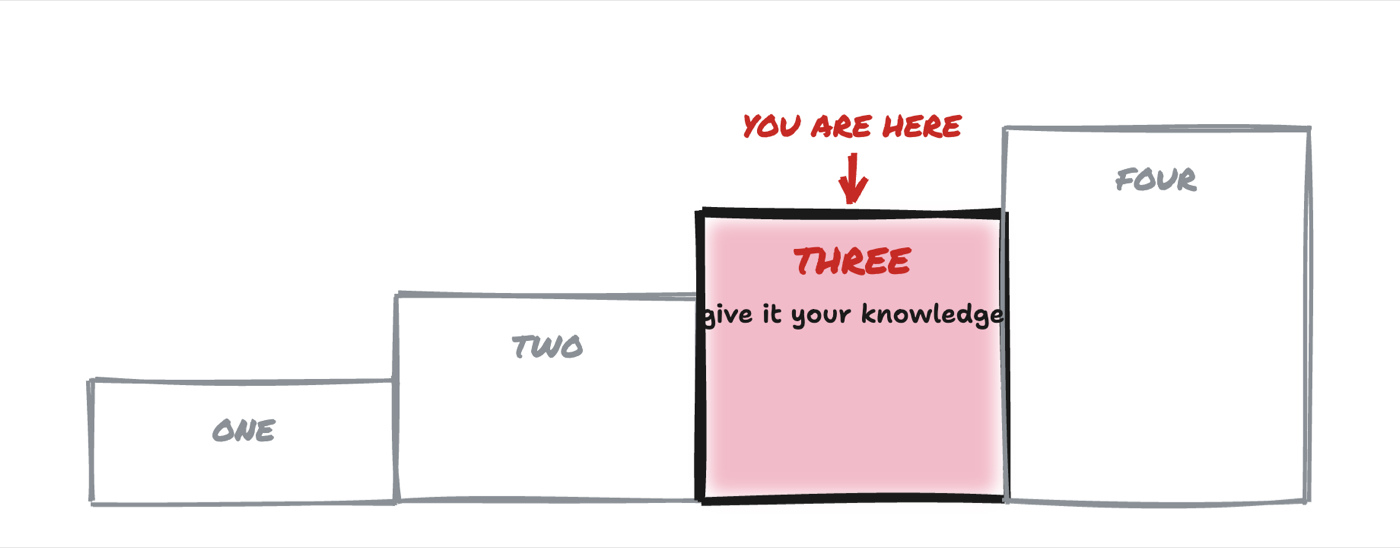
Out of the box, AI is like a very well-read generalist. It knows a little about everything.
At level three, you make it a specialist by giving it your knowledge and your skills: your customer research, your best-performing emails, your brand voice, your past results.
When I first learned this, this level meant fine-tuning, a technical process for training a custom model. Today it's much simpler. These days, AI can hold far more information in its head than it once did, so you can hand it your documents directly and tell it how to use them.
The difference is night and day. A generalist writes generic copy. A specialist who has read everything you've ever written about your customer writes copy that sounds like you on your best day.
Level 4: Let it do the job
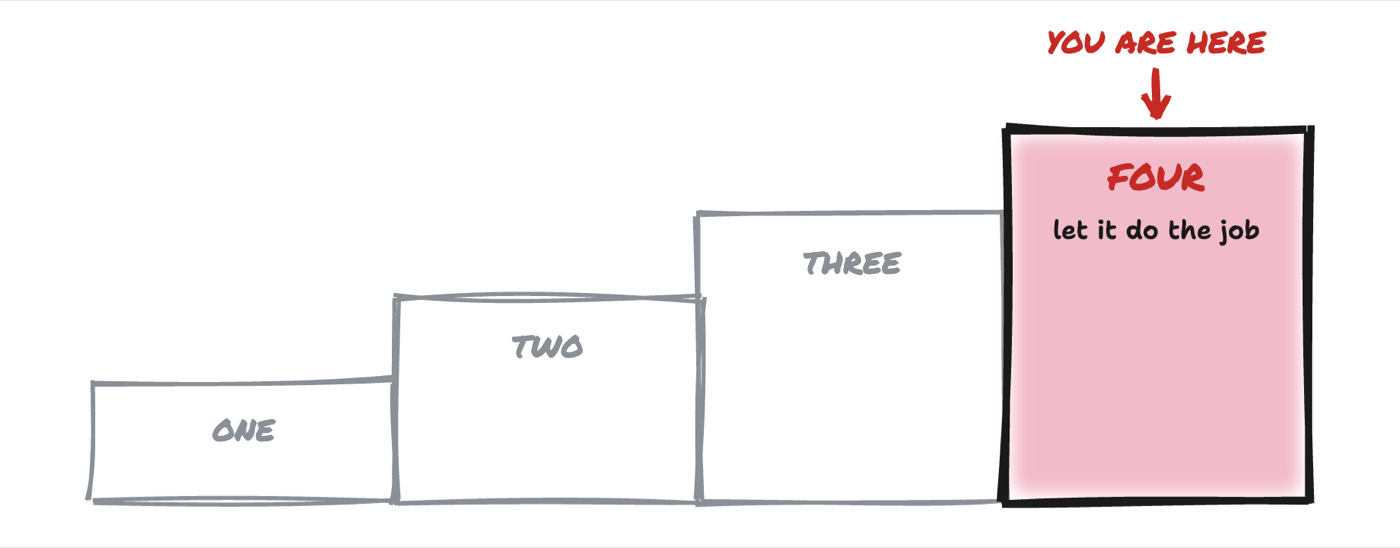
This is the newest level, and it's the one that's changing everything.
At levels one through three, you're still having a conversation. You ask, it answers, you decide what's next.
At level four, you hand the AI a goal instead of a question. It makes a plan, uses tools, checks its own work, and keeps going until the job is done. This is what people mean by an AI agent.
Instead of "write me a headline," it's "build me a campaign for this offer." And it does the research, writes the copy, builds the pages, and reviews the result against what you asked for.
When I first taught these levels, level four was machine learning: using your customer data to predict what each person wants. That's still powerful, and it's the heart of where marketing is headed. But agents are the bigger shift for most people today, because they change who does the work.
Where you should be
You don't need to be on level four to get enormous value from AI. Level two alone will take you further than most of your competitors.
But if you've tried AI and been underwhelmed, don't give up on it.
Move up a level.